Every year around Bealtaine I go through a brief but feral obsession with ricotta. It hit me last week, since when I’ve been daydreaming about this prefab grocery store pasta I had a few magical times when I was a teenager and my parents spent four years living in the suburbs of Zürich. These ravioli were only available for about six weeks a year, in the late spring. They were simple, with a lemon zested ricotta filling. Light and tender but also plain and normal and not really special. But they were miraculous for me as a young adult coming of age, because my parents’ cooking was genuinely *abhorrent* and the only other food I’d ever had was at the dining hall of my boarding school and the small restaurants operating in the small New England town my school was located in. (How things have changed since.)
I don’t have any actual pasta making equipment yet, so I can’t actually make the homage to those ravioli that has lived in my fantasies for eleven years now. But I wanted to achieve something like it within my limitations, and malfatti (also called gnudi, naked, because they are like ravioli filling cooked without the pasta) seemed a sensible place to start, given ricotta as a basis.
As with every poverty cuisine in which recipes follow family lineages, I couldn’t find any two references that agreed on the ingredient proportions. Most recipes called for blanched greens, and I didn’t have any. What I ended up with is unlikely to pass for traditional, since I gave up on finding a recipe that fit my desires and followed my usual method instead, which is to bastardize everything.
The goal with malfatti is to end up with pillowy, soft little dumplings that are satiating while also being light as clouds. I’m well satisfied that mine came out with the desired texture, and they held up well to both of the toppings I plated them with. I’ll write up both below.
I’ve eaten my malfatti for two meals now. I prepared the first with a light dusting of lemon zest and parmigiano and a sprinkle of Flamingo Estate’s chapparal salt, which I’ve been *dying* to use since it arrived a few days ago. For the second plate, I made a toasted, seasoned breadcrumb topping.
I offered three malfatti with the breadcrumb topping on the common altar, and they were well received. Saturn takes offerings from my personal plate instead of the common altar, and he expressed a preference for the modesty of the first preparation.
I usually leave offerings out for 24 hours before discarding the remains, but I noticed that these started to look unappealing after a few hours, so I took them away early.
This recipe makes two abundant or three light meals’ worth of malfatti, which I imagine could be stretched into four meals with a protein and fiber forward sauce and some creative thinking.
Ingredients
- 1 package Bellwether Farms whole milk basket ricotta
- 135 grams all-purpose flour, plus more for coating the dumplings (I used Red Tail Grains)
- 2 eggs (I used Vital Farms regenerative)
- 2 pinches sel gris (or other sea salt)
- Roughly 1/2 cup microplaned parmigiano
- Salt to taste for your pasta water
For plating
- EVOO (I used Flamingo Estate’s olio nuovo)
- 1 lemon (to zest)
- More parmigiano
- Flamingo Estate chapparal salt
- (For the second preparation only) Panko breadcrumbs
Preparing the dough
Drain any extra liquid off the ricotta, then add it to a mixing bowl. Add two pinches of salt and two eggs. Grate parmigiano directly into the bowl until it looks like a heaping half cup (harness your inner Type B for this). Mix all this together.
Add about a cup of all-purpose flour and mix it in. Add more if the dough seems unreasonably sticky or wet. You want it to be able to hold a shape.
Cover the dough and let it sit for an hour. This resting time is necessary for the flour to hydrate. You can wait longer, but if it’s going to be more than a few hours, stick the bowl in the fridge.
Shaping the malfatti
Uncover your dough bowl. Take out a plate to rest the finish dough balls on.
Scoop about half a cup of flour into a bowl. Coat your hands with flour. Prepare yourself for your hands to be sticky for about five minutes. Prepare yourself to move quickly through the task of shaping the dough and not spending too much time making anything perfect. The mantra is “done is beautiful.” Malfatti translates to “badly shaped.” This is an aspirational thing.
Pinch pieces of dough out of the mass in the bowl and immediately coat them in flour. *After* they are coated in flour, roll them between your hands to make them vaguely spherical. Then set them down on the plate, flour your hands again, and move on. You will accumulate dough on your hands, but it’s better to just accept it and move through. This task really drags if you keep stopping to wash your hands.
The dough balls will have wrinkles and look ugly; this is desirable. You can make them any size you want, but keep in mind that they will expand when they boil. I liked a half inch diameter best, for me they were two perfect small bites each. Smaller bites have more surface area to pick up sauce and toppings.
When you’ve made balls out of all your dough, *then* wash your hands, and while you’re at it bring the mixing bowl to the sink. Fill up the mixing bowl to soak. This dough is annoying to clean when it dries out because the eggs act like glue.
You can cook the malfatti right away, or you can store them in the fridge for about a day, maybe a day and a half. Malfatti aren’t great left over, so it’s better to cook only what you’ll eat immediately and store the rest uncooked.
Cooking the malfatti
Fill your usual pasta pot with cold water and salt it however you normally would. Set it up to boil.
When the water boils, add the malfatti to the pot one at a time. Take it slowly so the water stays at a boil. Cook in small batches so the malfatti don’t touch each other inside the pot. They cook quickly so it doesn’t take forever.
At some point, the malfatti will start floating on the surface of the water. After this, give them another two minutes or so, and then take them out of the water with a slotted spoon. Take all the floating malfatti out before you start the next batch.
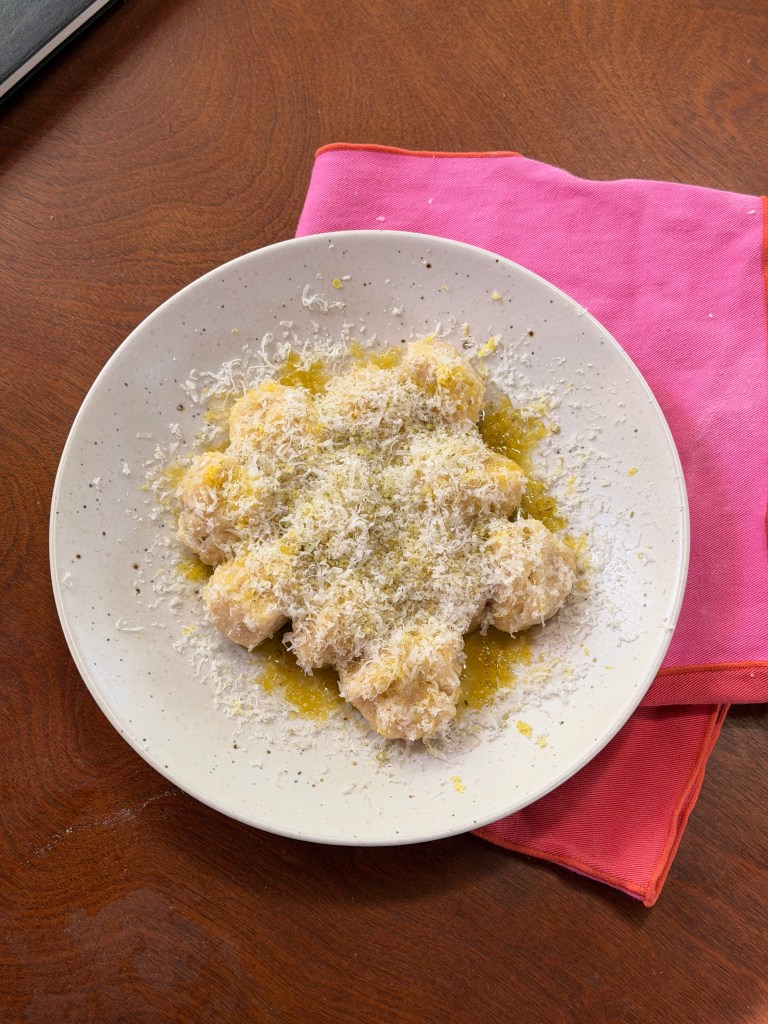
Saturn’s plating
Drizzle the malfatti with your best extra virgin olive oil.
Zest about 1/4 of a lemon directly over the malfatti.
Grate a light coating of parmigiano over the lemon zest. Make sure there’s not so much parmigiano that you fully obscure the bright yellow color of the lemon.
Sprinkle an herbal finishing salt over the top. I used Flamingo Estate’s chapparal salt, which is made with wild green garlic, sage, and fermented green peppercorn.
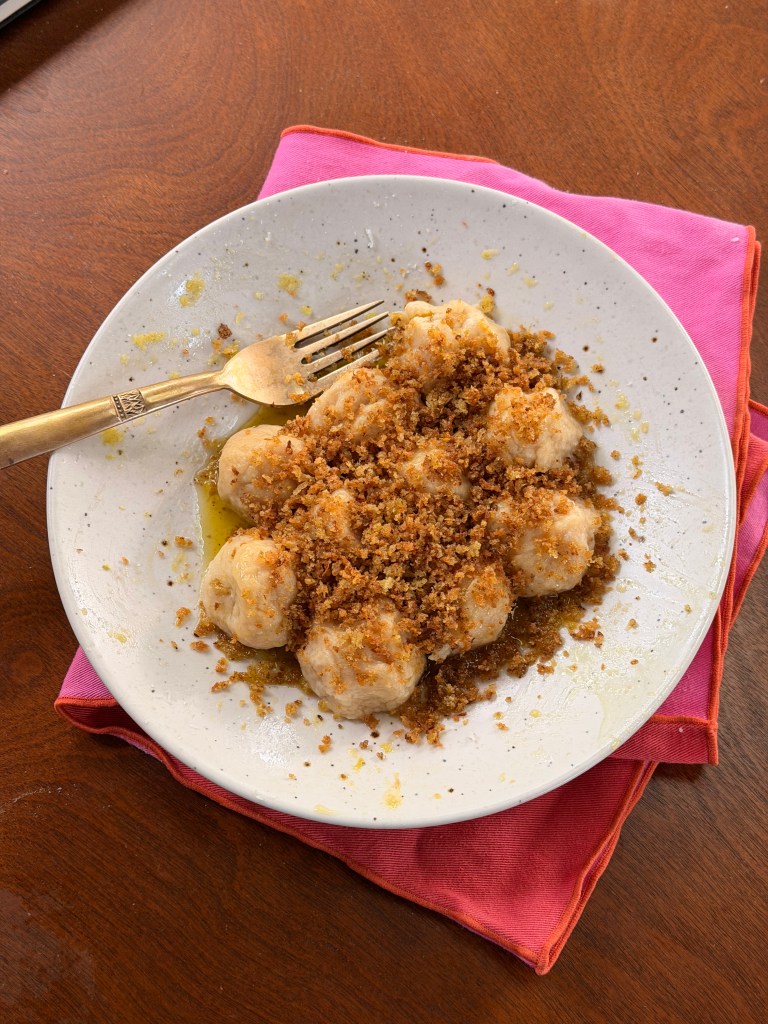
Zeus’ plating
Mix together Panko breadcrumbs (a scant quarter cup per person) with the zest of half a lemon, chopped herbs of your choice, garlic powder to taste, and salt to taste. Fry this mixture in olive oil until golden.
Drizzle olive oil over the malfatti, then top generously with the toasted breadcrumb mixture.
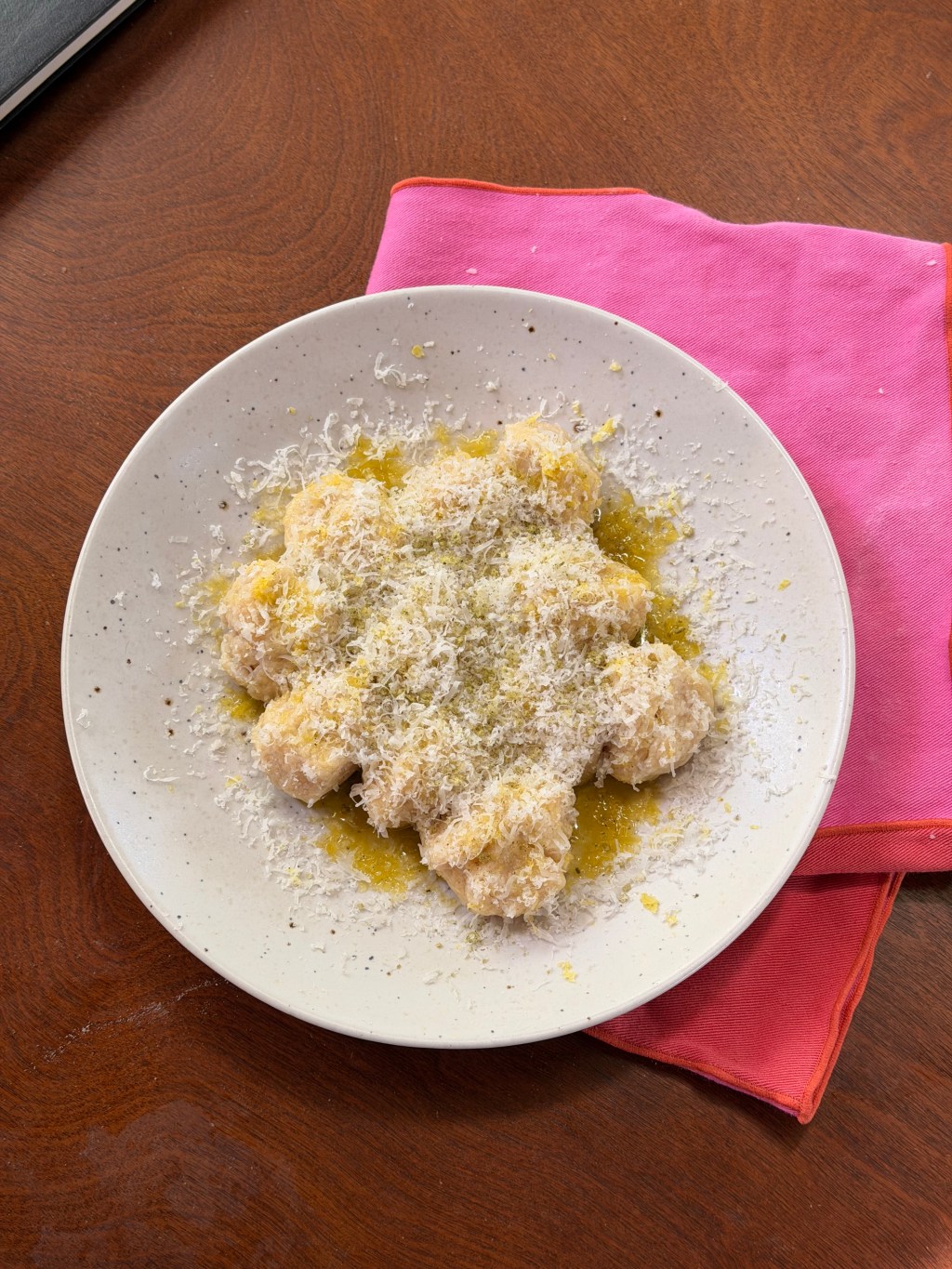
 Malefic Manach Test
Leave a comment